With Pressure to Success
Cold Extrusion -
Precision at Its Best
Cold extrusion combines cost efficiency with outstanding precision. The result: robust and precisely fitting cold-formed parts that can withstand the highest loads and lead to a significant reduction in material usage.
Our Best Solutions Are Created Under Pressure
Cold Extrusion: Precision Down to the Smallest Detail
Cold extrusion enables us to realise your ideas with the highest precision, transform your drawings into customised special parts and offer you a wide range of individual customisation options.

Sleeves & Bushings
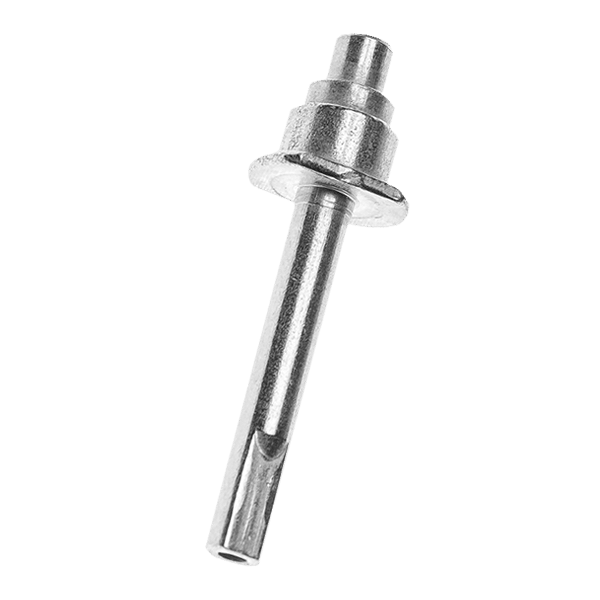
Rivet

Bolt
Cold Forming At Its Best
What Is Cold Extrusion?
Cold extrusion is a high-precision metal forming process in which material is shaped under high pressure.
In the production of complex components, the metal passes through multiple forming stages. The wire is successively formed within a series of dies and punches until the final geometry is achieved.

Greater Stability With Less Material
Why You Should Rely on Cold Extrusion
Cold extrusion combines efficiency, flexibility and cost-effectiveness unmatched by most other manufacturing processes. Key benefits include:
Strength
Full Power
Speed
Less Money
Geometries
High Precision
Good for Business
Areas of application
Invisible, but Indispensable
Flowing to Success: How Cold Extrusion Moves Entire Industries

Automotive Industry
Electrical Industry
Medical Technology
Building Hardware
White Goods
Leisure Industry


Want to Explore the Potential of Cold Extrusion?
Let’s Discuss Your Project!
- Thomas Heimlich, Technical Sales / Customer Engineering

Cold Pressed. Precision Without Compromise.
Cold extrusion: Discover the Resource-Efficient Process!
Cold extrusion is a high-precision forming process in which metal is shaped under extreme pressure without prior heating. The material is pressed between a punch and a die, flowing in a controlled manner into predefined cavities until the final geometry is achieved.
With 16 single- and double-stroke presses as well as 42 multi-stage presses with up to six forming stages, we process a wide range of material grades with maximum precision. Even complex components are manufactured efficiently from a simple wire blank — precisely tailored to your specifications.
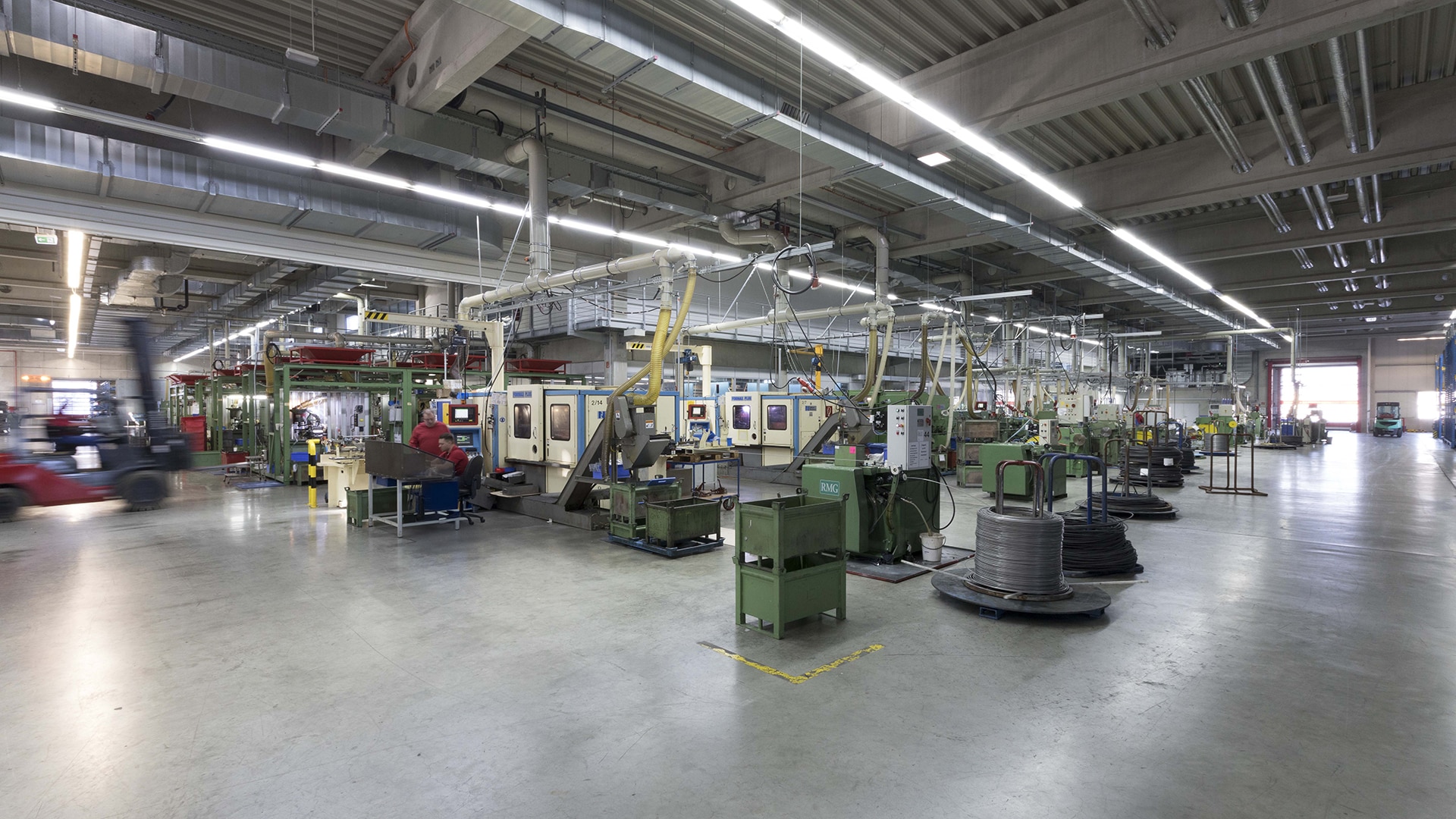
Discover Our Approach
Cold Forming at MN - Structured Processes, Perfect Results
Every successful component begins with a concept — and the right expertise to transform it into reality.
With a structured, engineering-driven approach, we support you from initial consultation through final production planning. Our goal: components that meet the highest technical standards while ensuring cost-efficient manufacturing.
If required, we provide turned prototypes made from the original material for early validation of form, function and material behavior — all within our integrated single-source production concept.
When Ideas Take Shape
Special Part Production in Cold Forming
The majority of our components are individually engineered special parts. With a clear focus on maximum precision and complex geometries, we develop efficient solutions for a wide range of demanding applications.
Cold extrusion delivers exceptional surface integrity and superior dimensional accuracy. At the same time, it enables significantly higher output rates – in many cases up to ten times faster than conventional turning processes.


The Power of Combined Manufacturing
Cold Extrusion with Machining Post-Processing
Cold extrusion often replaces conventional turning processes. If specific design features cannot be fully realised through forming, we integrate subsequent machining operations.
Features such as cross bores, grooves perpendicular to the axis or internal threads may require additional processing. By combining forming and machining where necessary, we ensure complete design freedom without compromising efficiency.

From Robust to Sophisticated
Cold extrusion: Flexible Material Selection. Superior Results.
We process a broad spectrum of materials suited to diverse applications. Each material has its own unique strengths:
| Material | Material Number | Standard | Remarks |
|---|---|---|---|
| C4C (QSt32-3) | 1.0303 | DIN EN 10263-2 | Low-Carbon Steel |
| C8C (QSt34-3) | 1.0213 | DIN EN 10263-2 | Low-Carbon Steel |
| C10C (QSt36-3) | 1.0214 | DIN EN 10263-2 | Low-Carbon Steel |
| C15C (QSt38-3) | 1.0234 | DIN EN 10263-2 | Low-Carbon Steel |
| RFe80 | 1.1014 | DIN 17405 | Soft Magnetic Steel |
| RFe120 | 1.1012 | DIN 17405 | Soft Magnetic Steel |
| C15E2C (Cq15) | 1.1132 | DIN EN 10263-3 | Case Hardening Steel |
| 16MnCr5 | 1.7131 | DIN EN 10263-3 | Case Hardening Steel |
| 20MnB4 | 1.5525 | DIN EN 10263-4 | Quenched and Tempered Steel |
| 23MnB4 | 1.5535 | DIN EN 10263-4 | Quenched and Tempered Steel |
| 33B2 | 1.5514 | DIN EN 10263-4 | Quenched and Tempered Stee |
| (35B2) | (1.5511) | (DIN EN 10269) | Quenched and Tempered Steel (Still Available) |
| 38B2 | 1.5515 | DIN EN 10263-4 | Quenched and Tempered Steel |
| 42CrMo4 | 1.7225 | DIN EN 10263-4 | Quenched and Tempered Steel |
| X6Cr17 | 1.4016 | DIN EN 10263-5 | Stainless Steel (Corrosion-Resistant) |
| X3CrNiCu18-9-4 | 1.4567 | DIN EN 10263-5 | Stainless Steel (Rust-Resistant) |
| X5CrNi18–10 | 1.4301 | DIN EN 10263-5 | Stainless Steel (Rust-Resistant) |
| X4CrNi18–12 | 1.4303 | DIN EN 10263-5 | Stainless Steel (Rust-Resistant) |
| X2CrNiMo 17–12–2 | 1.4404 | DIN EN 10263-5 | Stainless Steel (Corrosion- and Heat-Resistant) |
| X15CrNiSi25-21 | 1.4845 | DIN EN 10088-1 | Stainless Steel (Corrosion- and Heat-Resistant) |
| AW-1050 (Al 99,5) | 3.0255 | DIN EN 1301-2 / DIN EN 573-3 | Aluminium |
| AW-5019 (AlMg5) | 3.3555 | DIN EN 1301-2 / DIN EN 573-3 | Seawater-Resistant Aluminium Alloy |
| AW-5754 (AlMg3) | 3.3535 | DIN EN 1301-2 / DIN EN 573-3 | Seawater-Resistant Aluminium Alloy |
| AW-6056 (AlSi1MgCuMn) | ----- | DIN EN 1301-2 / DIN EN 573-3 | Age-Hardenable Aluminium Alloy |
| AW-6060 (AlMgSi) | 3.3206 | DIN EN 1301-2 / DIN EN 573-3 | Age-Hardenable Aluminium Alloy |
| AW-6082 (AlSi1MgMn) | 3.2315 | DIN EN 1301-2 / DIN EN 573-3 | Age-Hardenable Aluminium Alloy |
| AW-7075 (AlZn5,5MgCu) | 3.4365 | DIN EN 1301-2 / DIN EN 573-3 | Age-Hardenable Aluminium Alloy |
| CuZn36 | 2.0335 (CW507L) | DIN EN 12166 | Brass |
| CuSn4 | 2.1016 (CW450K) | DIN EN 12166 | Bronze (Bearing Bronze) |
| CUSn6 | 2.1020 (CW452K) | DIN EN 12166 | Bronze (Bearing Bronze) |
| Cu-ETP1 (E-Cu58) | 2.0065 (CW003A) | DIN EN 1977 | Copper |
| Cu-ETP (E-Cu58) | 2.0065 (CW004A) | DIN EN 1977 | Copper |
| Cu-OF1 (OF-Cu) | 2.0040 (CW007A) | DIN EN 1977 | Copper |
| Cu-OF (OF-Cu) | 2.0040 (CW008A) | DIN EN 1977 | Copper |
Less Material, More Options
Cold Extrusion - Maximum Material Utilisation
Cold extrusion not only ensures maximum dimensional precision – it also uses material with exceptional efficiency. Thanks to the Near-Net-Shape (NNS) process, waste is reduced to a minimum, enabling material savings up to more than 90 % compared to conventional machining methods.
In Near-Net-Shape production, the component is formed as close as possible to its final geometry. This significantly reduces or eliminates subsequent machining operations such as milling, turning or grinding.
Key Benefits of Near-Net-Shape Production:
-
Maximum Material Efficiency: Minimal waste due to near-final contour forming
-
Lower Production Costs: Reduced material consumption and fewer machining steps
-
Higher Productivity: Shorter production cycles through reduced machining
-
Improved Sustainability: Lower material waste and reduced energy consumption

Interesting Facts About Cold Extrusion
Precise Answers to Pressing Questions
-
What Makes Cold Extrusion So Efficient?
-
What Are the Key Advantages of Cold Extrusion?
-
Which Materials Can Be Processed?
-
How Precise Are Cold-Formed Components?
-
Can Customised Special Parts Be Manufactured?
-
When Is Cold Extrusion Economical?
-
How Is Quality Assurance Ensured?
Expertise in Technology and Production
More Information About Cold Forming
- Technical Analysis: Why You can Rely on our Quakity
- Toolmaking: How We Manufacture Customised Tools for the Production of Your Components
- Manufacturing Process: Our Manufacturing Process Explained in Detail

Your Project Deserves Our Expertise
Cold Extrusion. Your Competitive Edge.
Your competitive edge starts with engineering you can rely on.
For 125 years, we have combined precision, material efficiency and process stability to deliver superior components in series production.
Let’s build your advantage through cold extrusion.